Thursday, September 13, 2018
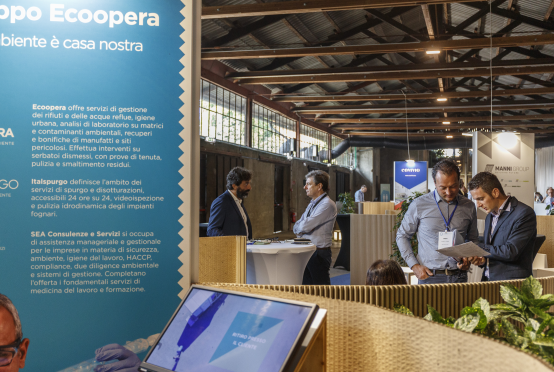
The aim in Europe and in Italy to reduce the production of waste from demolition activity that ends up in landfill to a minimum, has inevitably brought about the definition we know as “selective demolition,” or “strip-out.” Demolishing according to this method means entering into a circular perspective that optimises quality recovery, increasing recycling and the re-use of materials. Demolition is no longer therefore seen as the final stage of the construction process, but as a propaedeutic phase that can breathe new life into its components and materials. Indeed, up until now, demolition was perceived exclusively as the concept of an activity that transforms buildings into undifferentiated blocks of rubble, resulting only in waste that ends up as landfill or in smaller, low quality waste materials to be sent off to be reclaimed after a lengthy selection treatment. This method, together with the increasing costs of permanent disposal of waste resulting from the building process needs to be re-addressed, and the only feasible process, which can be achieved relatively easily, is that of selective building demolition. This is a deconstruction technique that allows the separation of waste into homogeneous compounds, guaranteeing the option to “check them” on the production site thus obtaining materials free from substances that could alter the reclaim process itself. The aim is to significantly increase the level of recyclability of waste generated on the demolition site by following a method that favours the quality aspect of the materials that can be obtained. Selective demolition requires, nonetheless, a substantial reorganisation of working methods, given the need to provide adequate staff training, as they will need to work in an informed manner if they are to achieve homogeneous blocks of materials and product waste. It is fairly obvious that this type of demolition process might end up being slower and more complex than the traditional method, with costs that would appear to be 15% - 20% higher than traditional demolition, but, at the same time, it results in a whole range of economic and environmental advantages, such as: the re-use of waste materials; a reduction in waste to take to landfill; the obvious saving of new raw materials and the energy necessary to produce them; a reduction in transport costs and the production of a higher quality of homogeneous materials. In the light of such considerations, it would therefore seem fundamental for demolition to change direction from the traditional (“linear”) route to the selective (“circular”) one.
For further details:
https://www.ecoopera.coop/it/recuperi-ambientali/strip-out/
Tags
Join us and become part of the future of the Italian construction industry.
12-13 MAY 2026 | Riva del Garda (ITALY)
REBUILD PARTNERS 2025 Learn about those who bet on innovation.
Platinum Partners






Gold Partners


Bronze Partners

















Local Partners



Scientific Partners




Learning Partner

Media Partners

















Communication Partner

National Sponsors














Local Sponsors




WITH THE CONTRIBUTION OF